
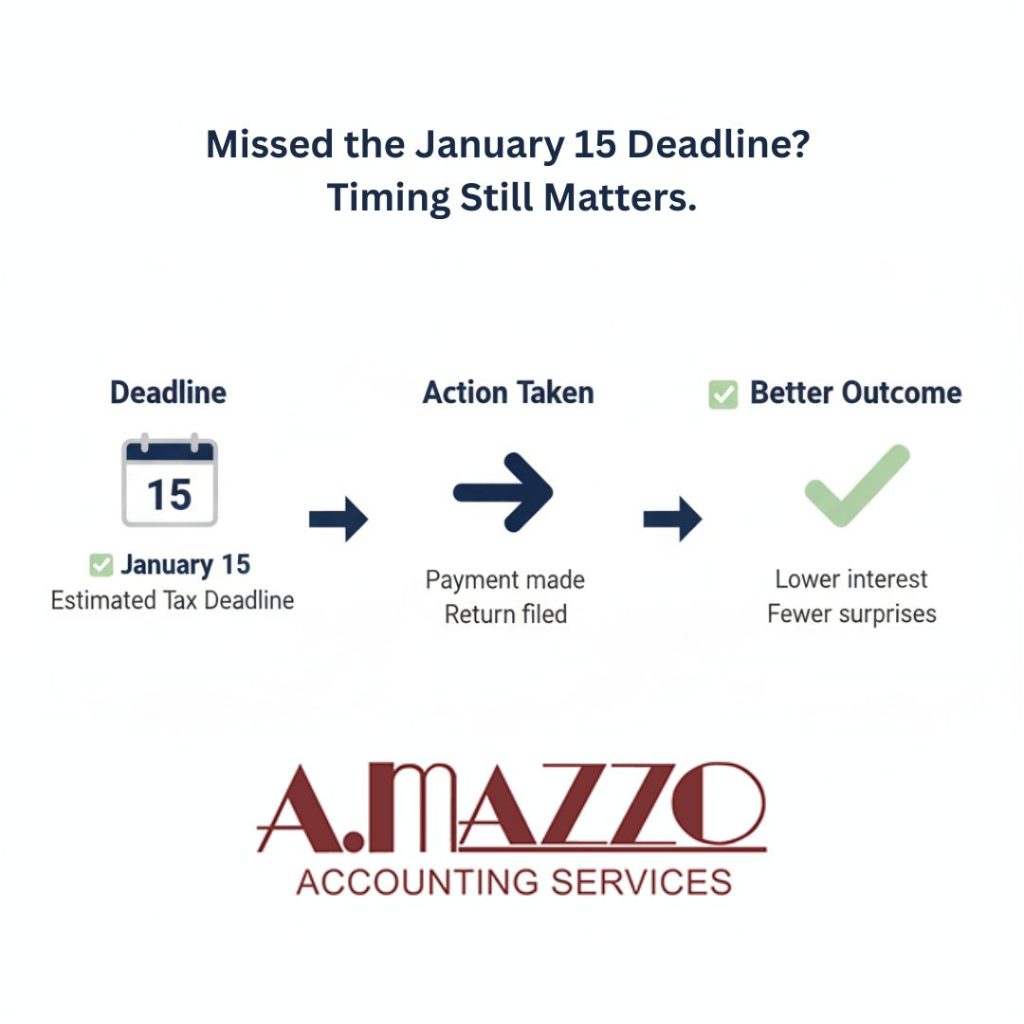
For self-employed individuals and small business owners, January 15 has a habit of arriving faster than expected. When the fourth-quarter estimated tax deadline passes without payment, it usually leads to one immediate question:
Is this a serious problem—or something that can still be handled sensibly?
The answer is reassuringly practical. Let’s walk through what actually happens next and what still makes sense to do.
What happens if you miss the fourth-quarter estimated tax payment?
Missing the January 15 estimated tax deadline may result in interest and a penalty on the unpaid amount. The impact depends on how much is owed and how quickly the situation is addressed. Making a payment as soon as possible and filing your tax return on time can significantly limit added costs.
That’s the short version. Here’s what it means in real life.
What Are Fourth-Quarter Estimated Tax Payments?
Estimated tax payments are quarterly payments required when income isn’t subject to automatic withholding. This most often affects:
- Self-employed individuals
- Freelancers and independent contractors
- Small business owners
- Anyone earning income outside a traditional W-2 role
The fourth-quarter estimated tax payment, due January 15, covers income earned from October through December. It’s the final estimated payment before annual tax returns are filed.
Unlike earlier deadlines, this one lands immediately after the holidays—when expenses are higher, cash flow can feel tighter, and financial tasks are easy to postpone.
What Actually Happens If You Miss the January 15 Deadline?
Missing the deadline does not trigger an immediate IRS notice or enforcement action. However, interest and penalties can begin accruing on any unpaid balance.
One detail many taxpayers underestimate is timing. Interest grows gradually, not instantly—but it does grow. That’s why addressing a missed payment sooner rather than later makes a difference, even with tax filing season right around the corner.
Importantly, a missed payment does not mean you’re in serious trouble. It simply means it’s time to shift from avoidance to a clear, informed plan.
What You Can Still Do Right Now
When you miss a deadline, the most effective response is a calm one. In many cases, these steps help minimize the impact:
- Submit the estimated payment as soon as possible to slow added interest
- File your tax return on time, even if the balance isn’t fully paid yet
- Take a closer look at whether last year’s estimated payments matched actual income
- Adjust your estimated tax approach so next year feels less reactive
Small course corrections now often prevent much bigger issues later.
Visual Guide: Timing Matters More Than Most People Think
| Payment Timing | Likely Outcome |
| Paid by January 15 | No interest or penalties |
| Paid shortly after | Some interest, usually limited |
| Paid when filing | Higher interest over time |
| No payment addressed | Penalties and interest continue |
Seeing the scenarios side by side often helps clarify why action—even imperfect action—is better than waiting.
Insight from A Mazzo Accounting Services
“Missing a deadline happens more often than people think, especially for business owners balancing a lot at once. What matters most is addressing it early and putting a plan in place so it doesn’t become a recurring issue.”
— Tony Mazzo, Owner, A Mazzo Accounting Services
That perspective reflects how we approach tax planning: steady, practical, and focused on long-term clarity rather than short-term stress.
Frequently Asked Questions
Will I automatically be penalized if I missed January 15?
Not automatically. Interest and penalties depend on how much is owed and how long it remains unpaid.
Should I still file my tax return if I missed the payment?
Yes. Filing on time often limits additional costs and keeps options open.
Can I catch up when I file my return?
In many cases, yes. Balances are frequently addressed during filing, which can reduce the overall impact.
Does missing this payment mean my estimates were wrong all year?
Not necessarily. Income shifts are common, especially for small business owners and freelancers.
Is it better to address this now or wait until April?
Addressing it sooner usually results in fewer surprises, less interest, and more control.
Get Clear Answers—Without Guesswork
When an estimated tax deadline is missed, guessing the next move can cost you more than taking a few minutes to review the situation properly. A short conversation clarifies where you stand, what needs attention, and how to approach the year ahead with confidence.
Schedule a conversation with A Mazzo Accounting Services to get straightforward guidance, clear explanations, and practical next steps—before small issues turn into bigger ones.