
Quick Answer
By June, most business owners have a pretty good feel for how the year is going.
Or at least they think they do.
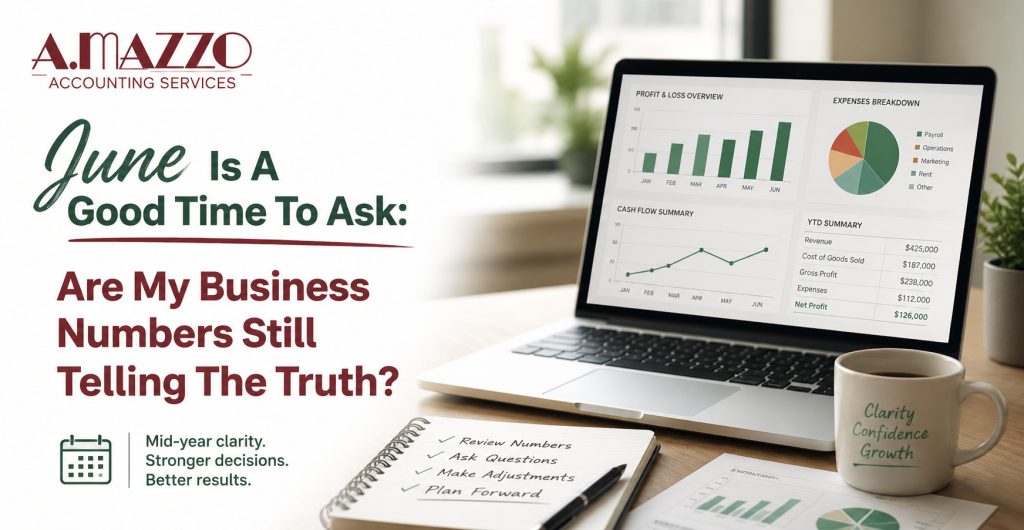
The challenge is that feelings and facts aren’t always the same thing. A midyear review can help determine whether your reports, cash flow, and profitability still reflect what’s actually happening inside your business before year-end arrives.
The Conversation We Have Every Summer
Every year around June, we start hearing a version of the same comment.
“I think we’re doing okay.” It’s usually followed by a pause. Then comes the real question.
“At least I hope we are.”
We understand exactly what they mean.
Most business owners don’t spend their days staring at accounting reports. They’re serving customers, managing employees, handling problems, and keeping things moving forward.
By the time summer arrives, they’re often running on momentum.
The business feels busy, phones are ringing, work is getting done, and the calendar is full.
That’s usually when we ask a simple question.
“What are your numbers telling you?”
Busy Doesn’t Always Mean Profitable
This surprises people. We’ve worked with business owners throughout Reading, Wyomissing, West Reading, Sinking Spring, Kenhorst, and the surrounding communities who were busier than ever. From the outside, everything looked great.
Their schedules were packed, projects kept moving, revenue was coming in.
Yet when we reviewed the numbers, the story wasn’t quite what they expected. They found expenses increased, margins narrowed, cash flow was tighter than they realized.
The business wasn’t failing, far from it. But the numbers were telling a different story than the owner believed.
That’s why a midyear review matters. It helps separate assumptions from reality.
The Report Nobody Has Looked At Since January
One business owner laughed when we asked when they last reviewed their Profit and Loss Statement.
They said: “Honestly? Last tax season.”
They weren’t embarrassed, they were busy like most business owners are.
The problem is that six months is a long time in business. There are many changes that happen in that time: prices change, costs change, customer behavior changes, the economy changes, and your business changes.
The reports you reviewed in January may not tell the same story in June. That’s why this time of year is such a valuable checkpoint.
Sometimes The Numbers Are Trying To Tell You Something
Years ago, we worked with a company that couldn’t understand why cash seemed tighter than normal.
Sales were steady. Work volume looked healthy. Nothing seemed obviously wrong.
After reviewing their accounts and tax records, the issue became clear. Several small expenses had gradually increased throughout the year.
Nothing dramatic. Nothing alarming by itself. But together they were affecting profitability.
The owner hadn’t noticed because each increase seemed insignificant. The accounting records noticed.
Numbers often reveal patterns before business owners feel the impact.
Are Your Receivables Starting To Drift?
June is also a good time to look at who owes you money.
Most business owners know their largest customers. What they don’t always know is how long invoices have been sitting unpaid. We’ve seen situations where aging receivables quietly became a cash flow problem.
Not because customers refused to pay, but because nobody realized how much money was tied up in outstanding invoices. A midyear review helps identify those trends before they become larger concerns.
Has Payroll Changed More Than You Realize?
For many businesses, payroll is one of the largest ongoing expenses.
New employees.
Additional hours.
Raises.
Seasonal staffing.
These changes happen gradually. Because they’re gradual, they sometimes go unnoticed.
Looking at payroll expenses midway through the year often provides useful insight into where the business stands compared to where it started.
The Question Every Owner Should Ask
If someone handed you today’s financial reports and removed the company name from the top, would the information surprise you?
- Would you be surprised by your profitability?
- Would you be surprised by your expenses?
- Would you be surprised by your cash position?
- Would you be surprised by how much you’re spending in certain areas?
If the answer is yes, June is probably a good time for a closer look.
The Goal Isn’t Finding Problems
Some business owners avoid reviewing their numbers because they’re afraid of what they’ll find.
We understand that. But a midyear review isn’t about looking for bad news. It’s about looking for clarity.
Sometimes the review confirms everything is on track.
That’s valuable information.
Sometimes it identifies opportunities.
That’s valuable too.
Sometimes it reveals issues that can be corrected before year-end.
Again, valuable.
The goal is understanding.
What We Like About June
January is all about planning. December is all about closing the year.
June sits right in the middle.
There’s still time to make adjustments, improve processes, address concerns, and take advantage of opportunities.
Waiting until tax season means you’re looking backward. A midyear review gives you a chance to influence what happens next.
The Best Meetings Usually End The Same Way
The most productive midyear reviews aren’t the ones where we uncover dramatic problems. They’re the ones where business owners leave with confidence.
Confident that their reports are accurate and that they’re making decisions based on facts rather than assumptions.
That’s what good accounting should provide.
Not just numbers, but clarity.
So, Are Your Numbers Still Telling The Truth?
Your business has changed since January. The question is whether your financial information has kept up.
At A Mazzo Accounting, we help business owners throughout Reading, Wyomissing, West Reading, Sinking Spring, Kenhorst, and the Greater Reading area understand what their numbers are really saying.
Because good decisions start with good information.
And June is a great time to make sure the story your numbers are telling are still the right ones.
Frequently Asked Questions
Why should I review my accounting records in June?
A midyear review helps identify trends, opportunities, and concerns while there’s still time to make adjustments before year-end.
What reports should business owners review at midyear?
Profit and Loss Statements, Balance Sheets, cash flow information, payroll reports, and accounts receivable reports are all useful.
Can a midyear review help improve profitability?
Yes. Reviewing expenses, pricing, cash flow, and financial trends can reveal opportunities that may improve business performance.
How often should business owners review their financial reports?
Monthly reviews are ideal, but a comprehensive midyear review provides an important checkpoint for most businesses.
What is the biggest mistake business owners make with their numbers?
Assuming they know what the numbers say without actually reviewing them.
At A Mazzo Accounting, we’re here to help business owners gain clarity, confidence, and a better understanding of where their business stands today and where it’s headed next.
Schedule a mid-year review with A Mazzo Accounting and gain the clarity you need to make informed decisions during the second half of the year.